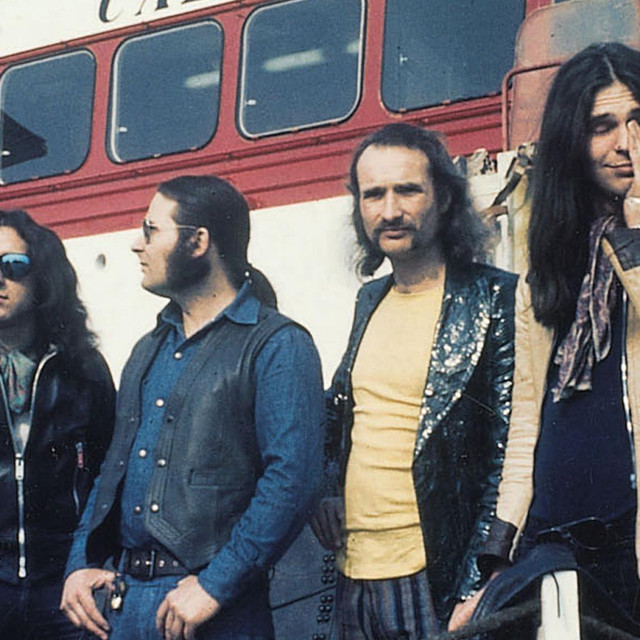
CAN
Can emerged from Cologne in 1968, bringing together Holger Czukay on bass and tape editing, Irmin Schmidt on keyboards, Michael Karoli on guitar and Jaki Liebezeit on drums. The group's members drew on avant-garde music and jazz as well as rock, and developed a sound that combined psychedelic rock, funk, samba, improvisation and musique concrète. They were widely hailed as pioneers of krautrock, though their records ranged well beyond any single style.
The band first worked as Inner Space, becoming The Can when American singer Malcolm Mooney joined as vocalist. Mooney fronted the group from 1968 to 1970, followed by Japanese singer Damo Suzuki between 1970 and 1973. With Suzuki, Can made albums including Tago Mago (1971), Ege Bamyasi (1972) and Future Days (1973), records that placed extended improvisation, dense studio editing and rhythmic repetition alongside more direct songs. The 1971 single “Spoon” and “I Want More” in 1976 reached national singles charts, giving the group commercial success alongside its experimental work.
Can also composed music for films by directors including Roland Klick and Wim Wenders. Later members included Rosko Gee and percussionist Rebop Kwaku Baah. Czukay was the first member to launch a solo career, while Schmidt also pursued extensive work after the band's original run. In 1986, Czukay, Karoli, Mooney, Schmidt and Liebezeit reunited, leading to the 1989 album Rite Time.
Michael Karoli died in 2001, followed by Jaki Liebezeit in 2017 and Holger Czukay later that year. Can received the German music industry's Echo Award for lifetime achievement in March 2003. Archival material remained part of the group's story after its active years, including The Lost Tapes, released in 2012. Can's recordings have been cited as an influence on artists working in rock, post-punk, indie rock, post-rock and ambient music.
Details
385.7K followers
Latest Release
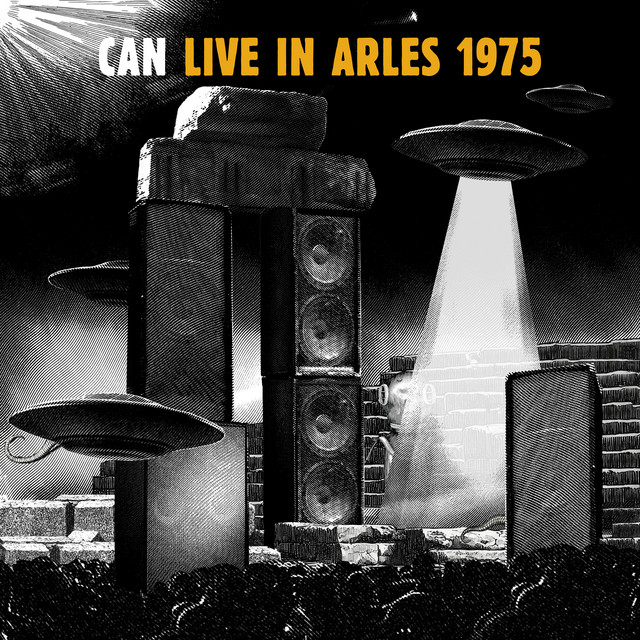
LIVE IN ARLES 1975
This is the most recent release from CAN, out .
Discography
Frequently Appears With
- Andreas Torkler(1 releases)
- Haendehoch.com(1 releases)
- Hervé Picart(1 releases)
- Hildegard Schmidt(1 releases)
- Holger Czukay(1 releases)
- Irmin Schmidt(1 releases)
- Jaki Liebezeit(1 releases)
- Jasper Ward(1 releases)
- Michael Karoli(1 releases)
- Pascal Bussy(1 releases)
Labels
- Mute
- Future Days Music
- Spoon Records
Related Artists
- Michael Karoli
- Pascal Bussy
- Sandra Podmore
- Jasper Ward
- Andreas Torkler
- Hildegard Schmidt
- Irmin Schmidt
- Uschi Siebauer
- Thierry Roule
- René Tinner
Stop missing releases.
Tracknack digs through album credits — producers, engineers, labels — so you don't have to. One Spotify or Apple Music playlist, always up to date.